
Bringing Clarity to Home Construction
The construction industry currently lacks a clear system that consumers can use to understand how different construction methods compare.
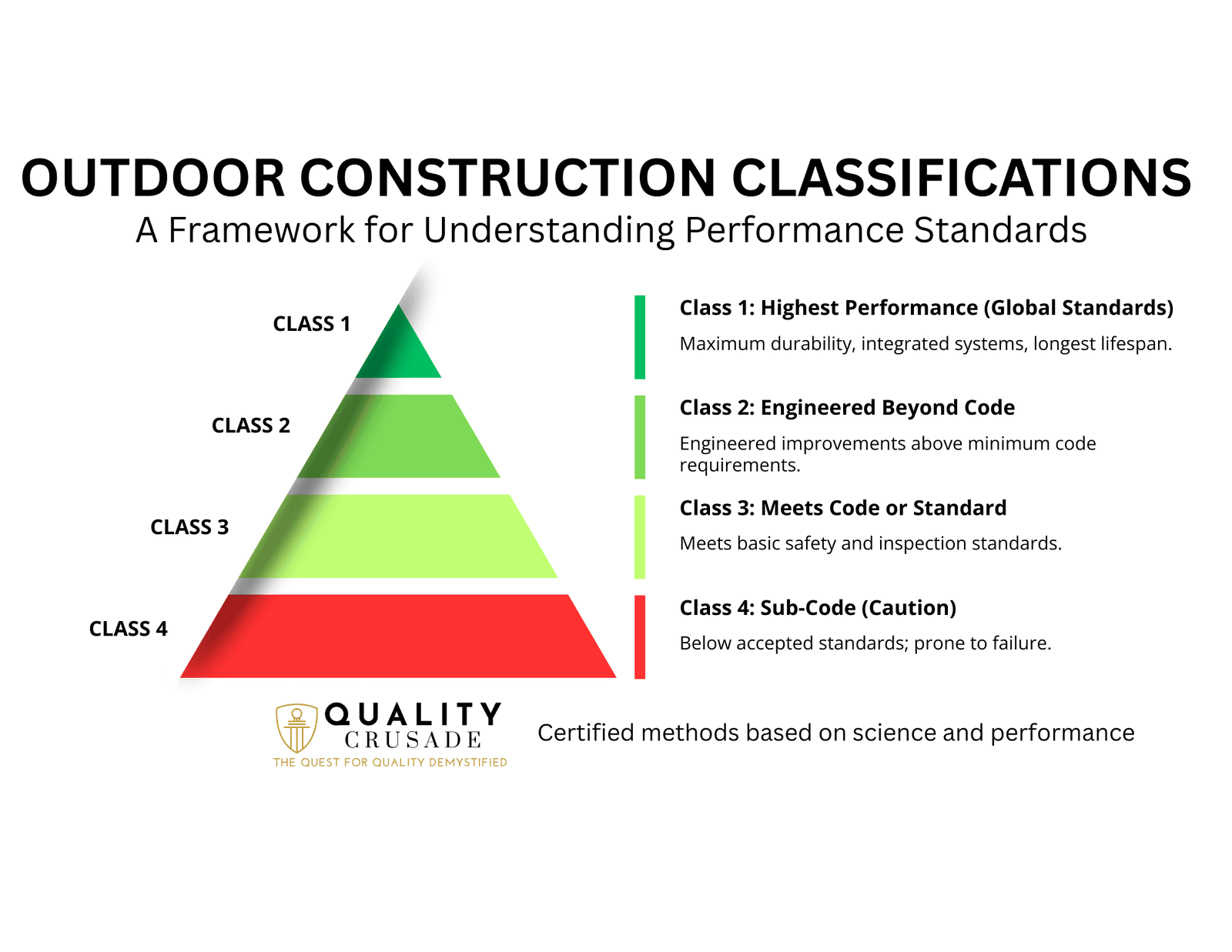
Quality Crusade introduces a four-tier classification framework designed to clarify the real differences between approaches, systems, and contractors.
These classifications help explain differences in:
Price
Construction methods
Engineering and materials
Durability and lifespan
Project timelines
Maintenance and long-term ownership costs
This framework allows homeowners to make informed decisions with confidence.
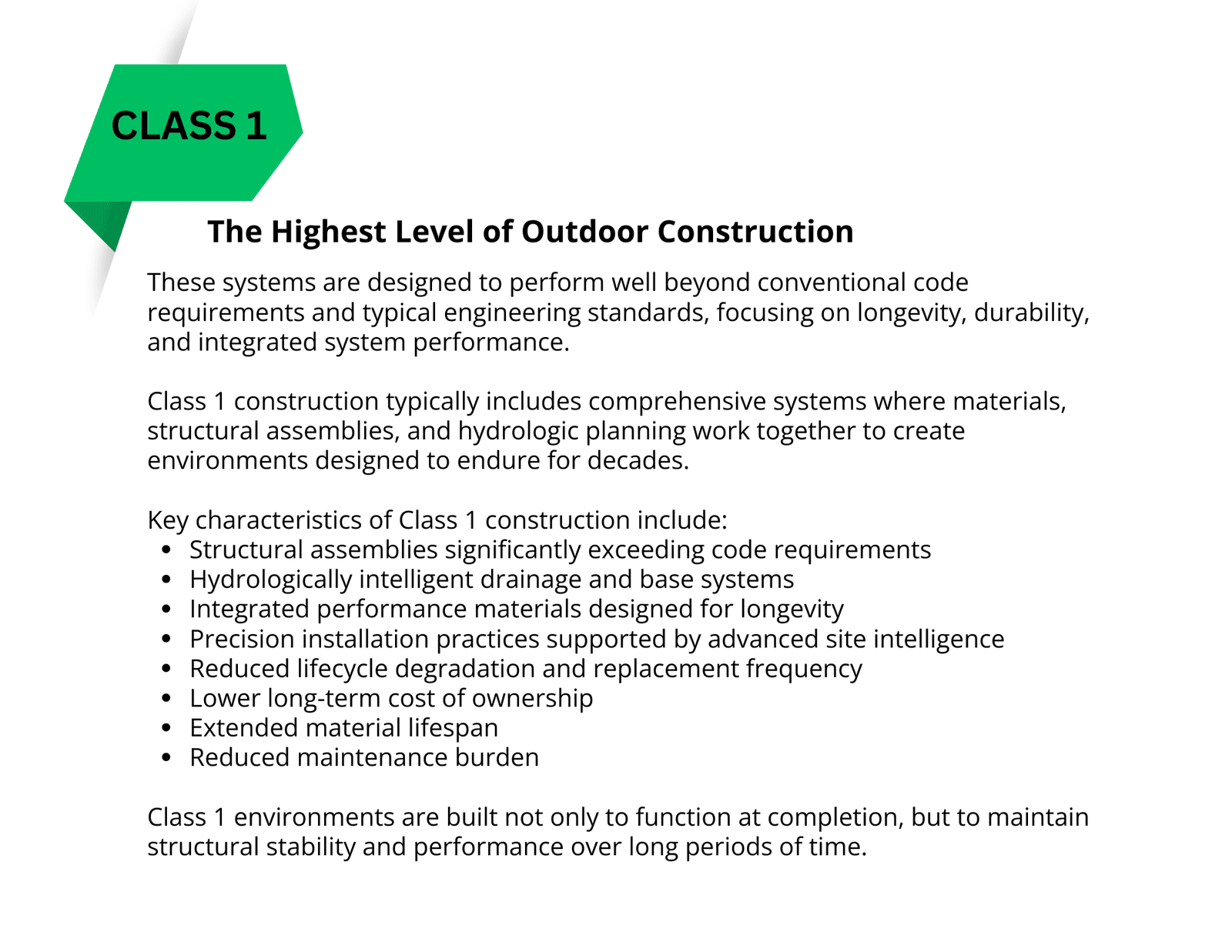
Highest Certification Level- Class 1
The most advanced level of outdoor construction.
These systems go well beyond basic code requirements and incorporate engineered assemblies, advanced materials, and integrated drainage and structural systems designed for maximum longevity and performance.
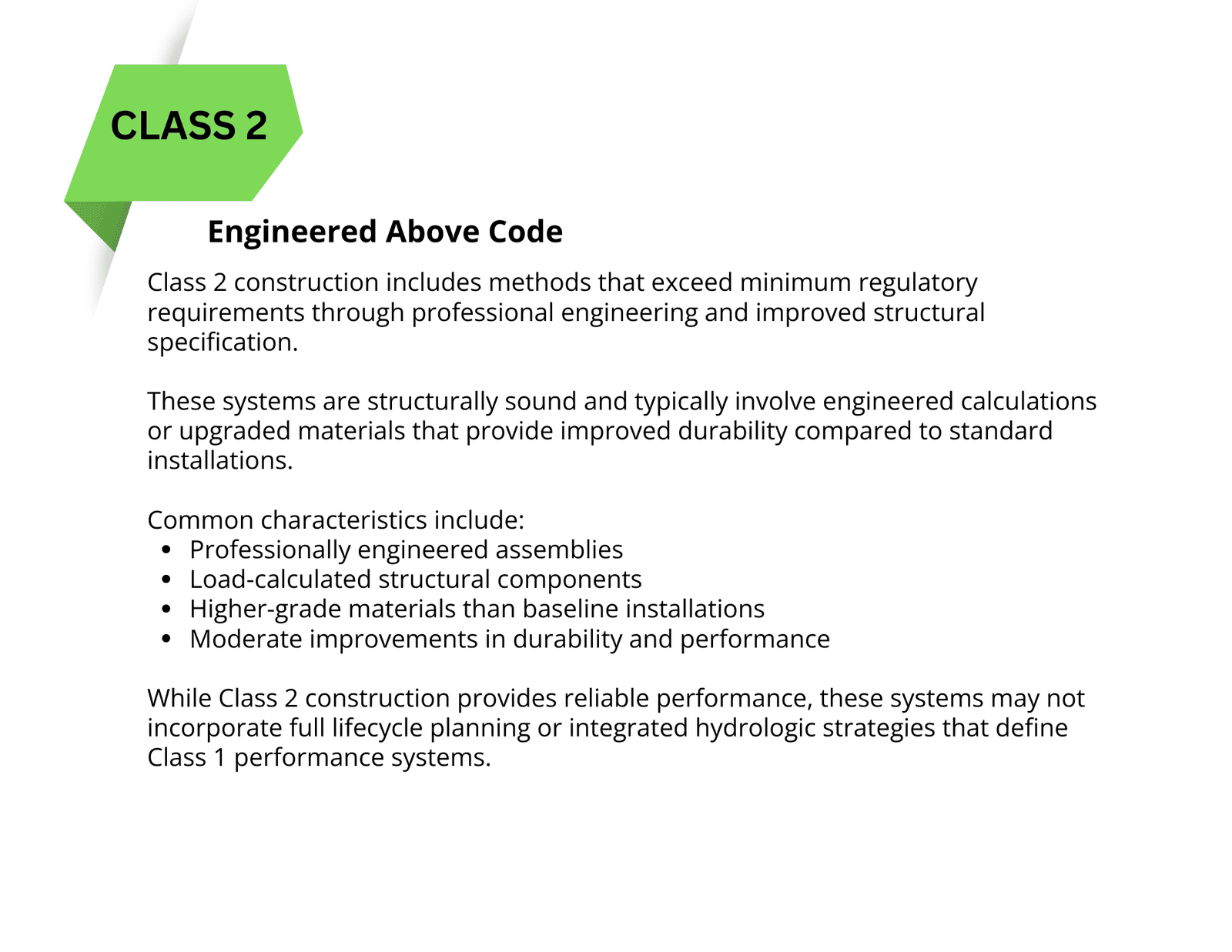
Class 2- Above Standard.
Class 2 construction improves upon baseline standards using professional engineering and upgraded materials.
These systems are structurally sound and built with improved durability compared to typical installations.
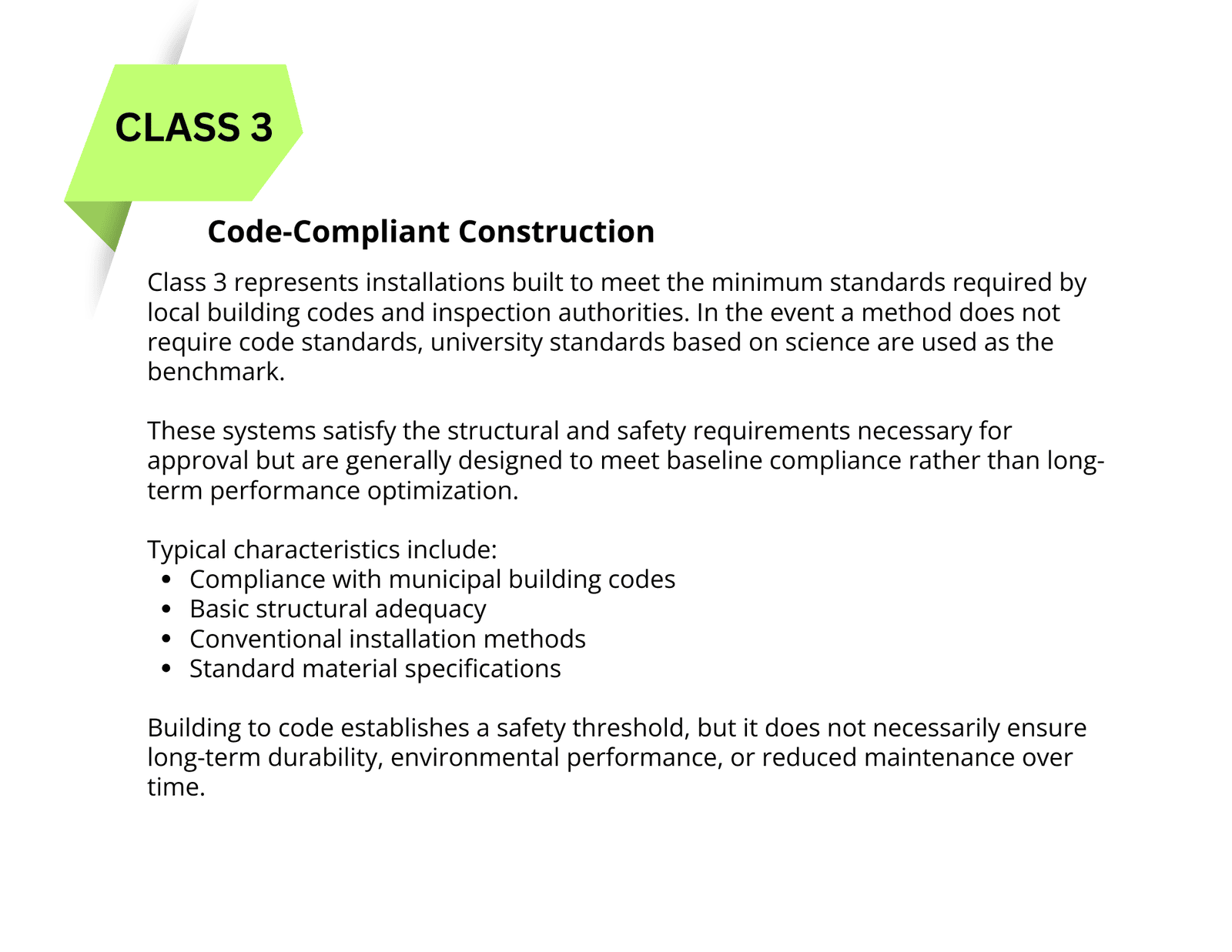
"Classes 1-3 are perfectly acceptable standards. Homeowners benefit from determining their best fit."
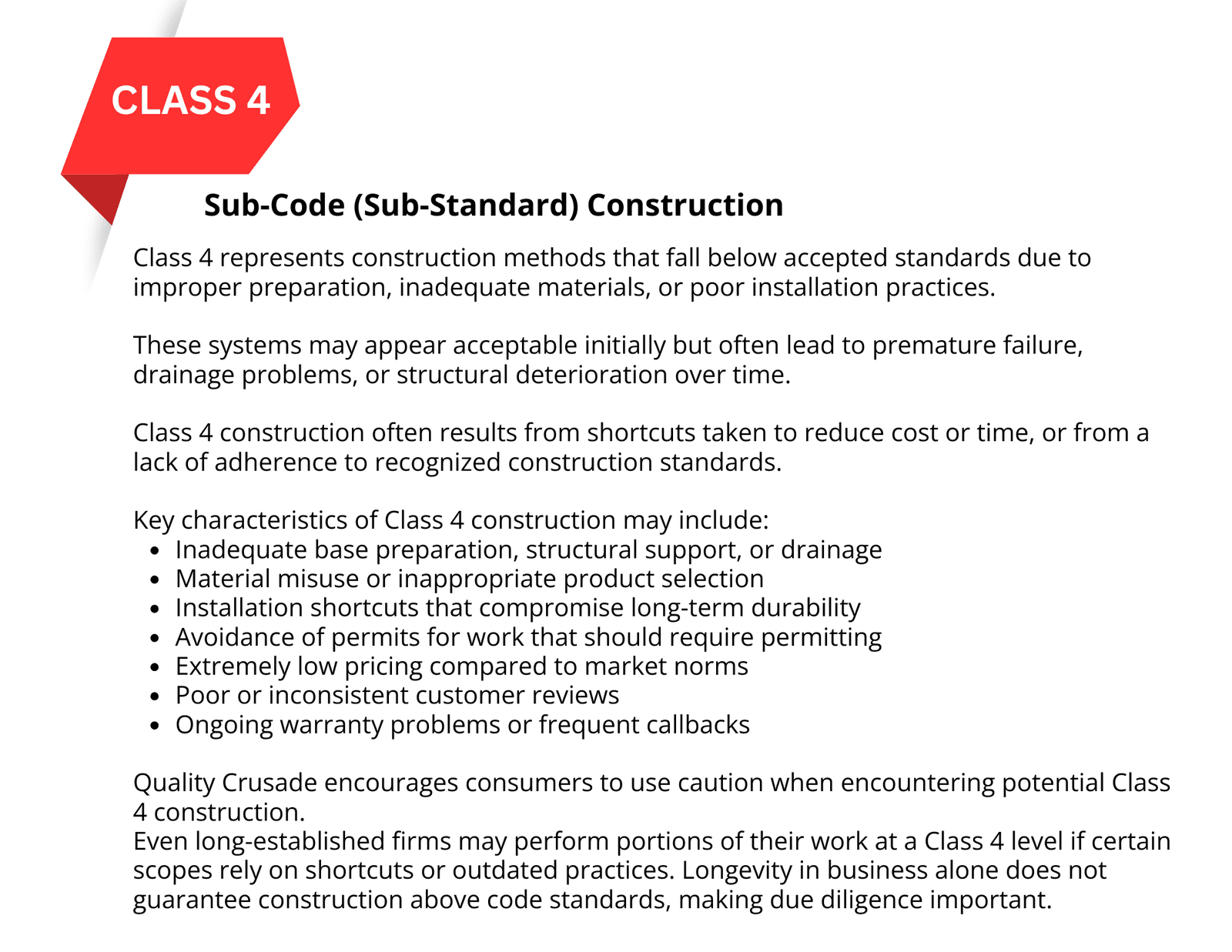
Class 4: Caution
Even established brands might perform parts of their work at Class 4. Do your Research .
Why These Classifications Exist
It’s important to understand:
Years in business or brand recognition do not guarantee quality level.
Even long-established companies may perform work at different quality levels depending on the project scope, budget, or methods used.
Quality Crusade does not exist to criticize contractors.
Instead, our goal is to:
Clarify the quality spectrum
Help consumers understand their investment
Create meaningful transparency in construction standards
Classifications simply provide insight into differences in cost, durability, methods, and expectations over time.
Helping Homeowners Make Better Decisions
Quality Crusade exists to help homeowners confidently navigate the complex world of residential construction.
Our goal is not to push one contractor over another.
Our goal is to help you understand what you're comparing.
Because when you understand the differences between methods, standards, and classifications, you can make the best decision for your project, your budget, and your long-term investment.